

Author: Stephen Harper
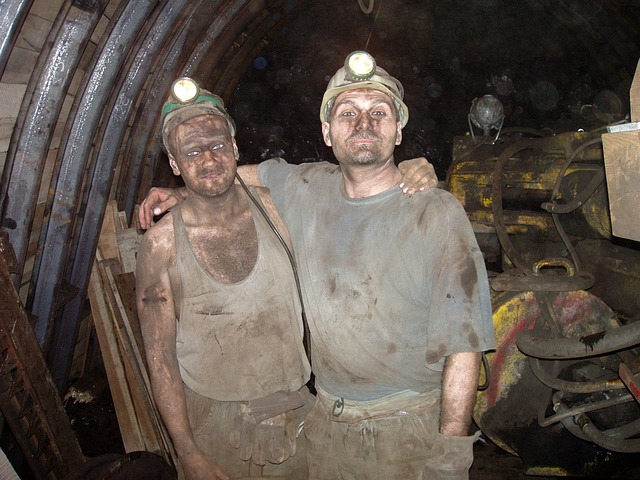
Virginia’s coal mines run along the western part of the state, and coal miners are actively seeing a surge in black lung disease after decades of declining levels.
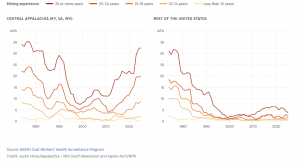
New data published in the American Journal of Respiratory and Critical Care Medicine released numbers that were more dire than clinicians had expected. While incidents of black lung in other parts of the country have stayed low after significant drops in the 1980s, the Appalachian coal mines show a sharp rise, right back to the toxic levels from the 1970s.
Black lung among miners in Virginia
Gathering information from mining communities is an arduous process, and results are released every five years. This allows researchers to test and track the disease in every coal mining community. All Appalachia data was gathered from Virginia, West Virginia, and Kentucky, where the mountainous region is rich in coal. Below is a side-by-side comparison of black lung incidents in Appalachia compared to the rest of the United States.
Black lung, by the numbers:
- Coal miners who have been working for 25 years underground had the worst cases of pneumoconiosis, or black lung disease – about one in three (32.5%) tested positive
- The last time the numbers peaked this high was in 1978.
- Those with at least 15 years underground are still experiencing rates of black lung that haven’t been seen in nearly 40 years.
- More than 1,700 coal miners have died from black lung between 2020-2023.
People at the National Institute for Occupational Safety and Health (NIOH) have openly expressed concerns about these findings. “These guys are being treated like disposable widgets, not human beings. … We’re watching them die right before our eyes,” said epidemiologist Scott Lacey. The findings were presented to the federal Mine Safety and Health Administration (MSHA). Both the NIOH and media outlets reached out to MSHA for a statement. The agency declined to comment and has not yet responded.
Coal mining: A historically dangerous profession
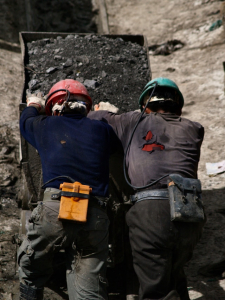
Coal miners are hard-working people, and the resurgence of black lung in the Appalachian mines adds yet another health risk in an already-dangerous occupation. For a regulated profession, coal mining remains one of the most hazardous lines of work in the United States.
Hazards that coal miners face can include:
- Structural failure and collapse: This is caused by weakened rock structures and accounts for 40% of underground fatalities.
- Rock falls: When rocks slip through structural bolts, they injure 400-500 coal miners every year.
- Surface slope failures: If the rock mass strength is miscalculated, mines are subject to wall collapses, or an avalanche of dirt and rock (land slips).
- Equipment hazards: Heavy trucks, bulldozers, and personal carriers cause fatalities every year when coal miners are crushed, pinned, or thrown from the equipment.
- Haulage: The Mine Safety and Health Administration reports that the primary cause of death is impact accidents with conveyors, shuttle cars, and heavy machinery.
- Toxic gas buildup: This includes carbon monoxide from exhaust, sulfur dioxide from blasting, and lethal hydrogen sulfide.
- Oxygen depletion: In poorly ventilated pockets, plummeting oxygen can lead to dizziness, unconsciousness, and asphyxiation.
- Explosions and methane fires: Pockets of highly explosive and trapped methane gas are released during mining. If it reacts with a spark, it can cause a devastating, fiery chain reaction.
- Electrocutions: Flooded underground environments can come into contact with high-voltage equipment, causing severe electrical shock to miners.
- Silicosis and mixed dust fibrosis: Silica dust is released when cutting through quartz and sandstone, and it is highly toxic to our lungs.
- Chronic Obstructive Pulmonary Disease (COPD): Coal miners with this illness are at significantly higher odds for death, compared to other people with the same illness.
- Exposure: Loud equipment without proper ear protection can cause noise -induced hearing loss (NIHL). Other exposures include carcinogens, such as when coal miners inhale diesel dust, which is linked to lung cancer.
Have mining companies faced accountability for working conditions?
While accidents do happen, many of them can be avoided. According to Science Direct, the majority of equipment-related accidents can be attributed to coal miners with fewer than five years of experience. Inadequate training and lack of oversight are contributing factors. MSHA issues tens of thousands of citations annually, yet many mines continue operating despite the fines and injuries.
The lack of oversight doesn’t solely extend to accidents, but also to wearing proper equipment that can protect your lungs, eyes, ears, and body. According to NIOH, mining has the highest prevalence of hearing impairment among all major industries – at a devastating 24%. A mine in Nevada was mired in a wrongful death lawsuit for failing to properly train a worker on how to apply his respirator mask, while another wrongful death case in New Mexico cited improper safety procedures.
If you have been hurt in a mining accident, call the experienced attorneys at Reinhardt | Harper | Davis today for a free case evaluation. Our personal injury and workers’ compensation teams consider each unique case thoroughly, and look for ways to protect injured workers.
Is there a cure for black lung?
Black lung is incurable. Once the coal dust and silica cause scarring and inflammation in the lung tissue, the damage cannot be reversed. When coal miners are treated for pneumoconiosis, the focus is on managing symptoms and slowing disease progression.
Management consists of:
- Medications, such as bronchodilator inhalers to open tight airways and corticosteroid pills to reduce inflammation
- Pulmonary rehabilitation: Exercise that maximizes any remaining lung efficiency and strength
- Supplemental oxygen
- Lung transplant
Is a lung transplant considered a cure for black lung?
Medical professionals see lung transplants as swapping a terminal illness for a new, complex medical condition. Rather than being “cured,” lung transplant patients face a new host of issues, including:
- Chronic rejection: The immune system sees the new organ as a foreign threat, potentially causing chronic lung allograft dysfunction (CLAD)
- Lifelong immunosuppression: To keep the immune system at bay, it is medically repressed, leaving the host open to contracting many illnesses. It also increases the risk of the host developing cancer or experiencing organ failure.
- Limited lifespan: The five-year survival rate after a lung transplant sits at roughly 50%-60%.
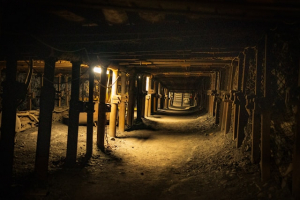
I was injured working in a coal mine. Should I call a lawyer?
Absolutely. Coal mines are for-profit companies that look to protect their bottom line. This extends to the insurance companies tied to their businesses. At Reinhardt | Harper | Davis, our business is protecting the injured worker.
A study by the University of Illinois Chicago revealed that doctors hired by coal companies read X-rays as negative for black lung 84.8% of the time, compared to just 51.3% for doctors hired by the miners.
Skilled attorneys can better navigate the federal laws and limitations that apply to mining companies, and the complex legal paperwork tied to workers’ compensation and personal injury claims. It is vital to get an unbiased medical opinion and to have a fighter to navigate corporate pushback. When you are suffering from illness and/or injury, lawsuits can feel overwhelming if trying to take on powerful companies alone. This does not have to be your story.
Coal miners are hard workers who put their lives on the line to ensure that everyone has access to energy. Your focus should be on healing. Let Reinhardt | Harper | Davis take care of the rest. If you are a Virginia coal miner who is sick or injured, a free case evaluation could be the first step to a better quality of life. Call Reinhardt | Harper Davis today at 800-884-9507, or fill out our contact form online. We look forward to helping you.