



Author: Craig Davis
When it comes to big truck accidents, there is no such thing as a fender bender. Those large trucks you see on the interstate, also known as 18-wheelers and tractor-trailers, cause catastrophic injuries and even death. A fully-loaded tractor-trailer weighs over 80,000 pounds — which is 20 times the size of an average passenger car — and poses a significant risk to other drivers. A study by the federal government determined that large trucks account for 13% of fatal crashes on U.S. roadways, with the majority of those fatalities involving individuals in smaller vehicles.
In Virginia, tractor-trailer collisions account for 4.4% of all traffic accidents. From 2020 – 2024, there were 4,645 traffic fatalities on Virginia roads. In 2024 alone, commercial truck accidents resulted in 108 deaths.
A trucking accident can leave the injured person feeling overwhelmed and unsure about the future. At Reinhardt | Harper | Davis, we’re here to help with a step-by-step action plan to help you navigate the aftermath of this difficult time. If you’ve been injured in a tractor-trailer crash due to someone else’s negligence, this guide will help you protect your legal rights and share best practices on maximizing compensation for your injuries.
Our compassionate and experienced truck crash attorneys offer free case evaluations to better help you understand your unique situation.
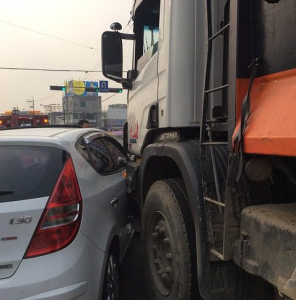
What to do after a truck accident
Step 1: Safety first
The moments immediately following a truck accident are usually disorienting. Many victims describe the incident happening in the blink of an eye. There is often shouting and flashing lights from first responder vehicles. There is usually debris and vehicles scattered across the road. But even in this chaotic scene, you must first think of your immediate safety, and the safety of those around you.
- If your vehicle is still drivable, move it away from the flow of traffic and onto the shoulder of the road without fully leaving the scene.
- Activate your hazard lights to ensure passing vehicles see you and can provide space.
- If you are able, set out any flares or other warning devices to provide additional warning to oncoming motorists.
- If you are able, use your phone to record photos and video of the vehicles involved in the collision and the scene.
- Check yourself for injuries, and if there are passengers in the car, assess their current state as well.
- If you can maneuver out of your seat belt, check on other drivers on the road who may have been affected. This includes the truck driver involved in the collision. These moments could be critical in saving a life.
- If you have suffered serious injuries or are unsure of how badly you are hurt and your vehicle is in a safe location, stay still until you can be assessed by medical personnel.
- If your vehicle is still in the roadway, try to exit your vehicle and move a safe distance away to wait for medical personnel.
Step 2: Report the incident
- Dial 911 and provide details on the emergency. Even if you believe you were spared severe injuries, it is vital to report the collision to the police so that a police report is created.
- When speaking to the police and rescue personnel, be truthful and factual when answering their questions. Police reports are vital pieces of evidence for lawsuits and filing insurance claims.
- Be sure to retain a copy of the police report, and the contact information for the officers at the scene.
Step 3: Gather your own evidence
While the police on the scene will make a conclusion about the cause of the accident, it is important to gather your own evidence, if your health and the safety on the scene will allow it.
Trucking companies often deploy their own investigators and lawyers to the scene of a truck crash, and sometimes immediately following a collision. Their job is to collect any evidence that could work in their favor, as they are trained to protect their company’s bottom line in a potential trial or settlement. Because you don’t have a lawyer or investigator on standby who can do the same, it is crucial to preserve as much evidence at the scene as possible if you are physically able to.

Steps you should take:
- Stick to the facts. When speaking with people at the scene, avoid admitting fault or any speculation on the details. Even a general apology at the scene could be used against you later. Do not speak about your injuries at the scene to anyone other than the police and rescue personnel – these statements can be used against you if your condition worsens later. Often, the adrenaline rush and shock we experience post-crash protects us from feeling the full extent of our injuries.
- Use your phone or a camera to document the truck crash scene via photos and video. Include images of the tractor-trailer, including the driver’s door which contains information regarding the trucking company, vehicle damage, damage to surrounding structures, skid marks, traffic signals and signage, and the scene in general. Be sure to also document your injuries.
- Obtain contact information, including names and telephone numbers for any witnesses who stop at the scene. Their testimony may be vital to overcome defenses made by the trucking company. Only engage with the truck driver to ensure they’re safe, and to exchange contact and insurance information.
- Make note of the details of the scene, such as the weather conditions, location, time, etc.
Step 4: Seek or accept medical attention as soon as possible
Though you may feel stable, always seek medical attention. Many who have refused medical treatment at the scene later experience pain, dizziness, headaches, and numbness. There’s no need to be a hero and try to tough it out. Get checked out by medical professionals and document all of your injuries and symptoms, no matter how minor. The adrenaline and shock you experience after a truck crash can shield you from a litany of concerning conditions, such as:
- Internal bleeding: Damage to the organs is life-threatening if left untreated
- Traumatic brain injuries, such as a concussion
- Whiplash and neck injuries: Soft tissue damage can result in long-term pain, mobility issues, and inflammation
- Spinal cord injuries: Damage may not be immediately felt, but can lead to mobility issues or even paralysis
- Broken bones and fractures: Some fractures are not immediately painful and require medical imaging (such as an MRI or CT scan) to diagnose

Step 5: Report the truck accident to your insurance company
As soon as possible after the collision, report the tractor-trailer crash to your insurance provider. However, do not provide any insurance company with a recorded statement until you’ve consulted with a truck accident attorney. Although you may think that you are protected in these situations, insurance companies will attempt to minimize your claim and limit the compensation paid to you to protect their bottom line. An experienced tractor-trailer lawyer can guide you through the nuances when it is time to provide a recorded statement.
Step 6: Contact a truck accident lawyer
Cases involving tractor-trailer collisions are complex and require an intricate understanding of regulations within the trucking industry. Here are some of the many reasons victims should seek legal counsel:
- Trucking crashes often involve multiple parties who could be liable for the collision, including the tractor-trailer driver, the trucking company, the company that owns or loaded the cargo, the truck manufacturer, and other factors.
- Our attorneys are very knowledgeable in the state and federal regulations that apply to the trucking industry. Tractor-trailers are often subject to additional rules and regulations that require them to undertake additional safety and training. Serious collisions occur when drivers and their companies do not follow these safety rules.
- Trucking companies have their lawyers and investigators working to protect them almost immediately after a collision. It is important that you contact a lawyer as soon as possible so they can begin gathering evidence that protects you and supports your case before it disappears.
- Timing is an essential factor as well, as there are statutes of limitation for filing lawsuits. Missing a deadline can upend a case. Though the statute is usually two years from the date of the accident, trucking lawyers know of possibilities for extension.
Reinhardt | Harper | Davis believes your focus should be on healing, while your trusted team of legal professionals navigate the nuances of liability, insurance claims, and medical coverage.

Step 7: Follow the advice of your legal team throughout your journey
When you partner with Reinhardt | Harper | Davis, we help to take away the uncertainty that follows a tractor-trailer collision. We understand that many questions arise during this time, such as: How will I be able to pay my medical bills? What if I cannot go back to work for a while? How will I take care of my family?
One way our attorneys protect your family is to help you avoid trick tactics employed by insurance companies. These carriers often offer victims an immediate, lowball offer. Though a quick, lump sum of cash feels convenient, the defendant’s insurance company is not factoring in many long-term expenses you could accrue. They even deny claims in an attempt to intimidate and force you to accept an inadequate offer. Reinhardt | Harper | Davis protects their clients by properly working up the value of a case.
We have helped countless families navigate this difficult time, and can answer questions for your unique life situation. One thing is for certain: Adhering to the guidelines set by your legal team will help you build the strongest case possible. This will only help in maximizing your benefits and getting your life back on track.
Our truck accident victims are always advised to:
- Keep detailed records of medical visits, tests, and treatments
- Save receipts for medical equipment and medications, such as pharmacy prescriptions, co-pays for emergency room and doctor visits, out-of-pocket expenses for medical equipment such as wheelchairs or crutches, rehabilitation sessions, therapy expenses, etc.
- Maintain your appointments for physical therapy and rehabilitation, if this applies to your case. Failure to show up to an appointment, or even reschedule a canceled one, could be used as proof that your injuries are not as severe as you claim them to be.
- Schedule your surgery or specialized treatments for severe injuries, and follow through with the post-operation instructions.
- Should the accident leave you suffering with PTSD, anxiety, or depression, please seek mental health support to manage the trauma of your accident.
- Maintaining these records is vital in proving the extent of your injuries, and justifying compensation for your lost wages, medical bills, pain, and suffering.
What benefits am I entitled to if I’ve been hurt in a truck accident?
The legal team at Reinhardt | Harper | Davis believes in open communication about expectations. Though every case is different, if you are injured through the fault of a truck driver and a trucking company, you are entitled to compensation for the following:

- Medical expenses (surgery, rehabilitation, long-term treatment)
- Lost wages (reimbursement for missed work due to injuries)
- Pain and suffering (physical and emotional trauma)
- Future medical costs (for ongoing treatment or permanent disability)
- Future pain and suffering
Other benefits you may be entitled to include:
- Property Damage coverage: This pays for vehicle repairs or replacement of your vehicle if it is totaled
- Rental car while your vehicle is being repaired
- MedPay, or Medical payments coverage: This coverage provides additional money to cover your medical expenses.
- (UM/UIM) or uninsured/underinsured motorist coverage: This helps with coverage
Tractor-trailer collisions are traumatic, and Reinhardt | Harper | Davis is here to ensure you don’t have to brave the next steps alone. Call us for a free case evaluation today at 800-884-9507, or reach out to us online. We will fight for the justice you deserve.